WHY SOCIAL COMMERCE AND CASUAL GAMES WILL SHAPE THE NEXT WAVE OF CONSUMER BEHAVIOR
In the digital world, users don’t just seek convenience—they seek emotion. And the two industries leading this emotional shift are Social Commerce and Casual Games. One makes shopping more social and shareable; the other makes entertainment more accessible, joyful, and irresistibly engaging.
When these two worlds intersect, they create a new consumer model—one where people can “play,” “shop,” and “share” all at once. And brands, in turn, sell not just through discounts but through delight.
This phenomenon, known as Gamified Social Commerce, is already on the rise across global markets - with the success of Pinduoduo in China often seen as the starting point.
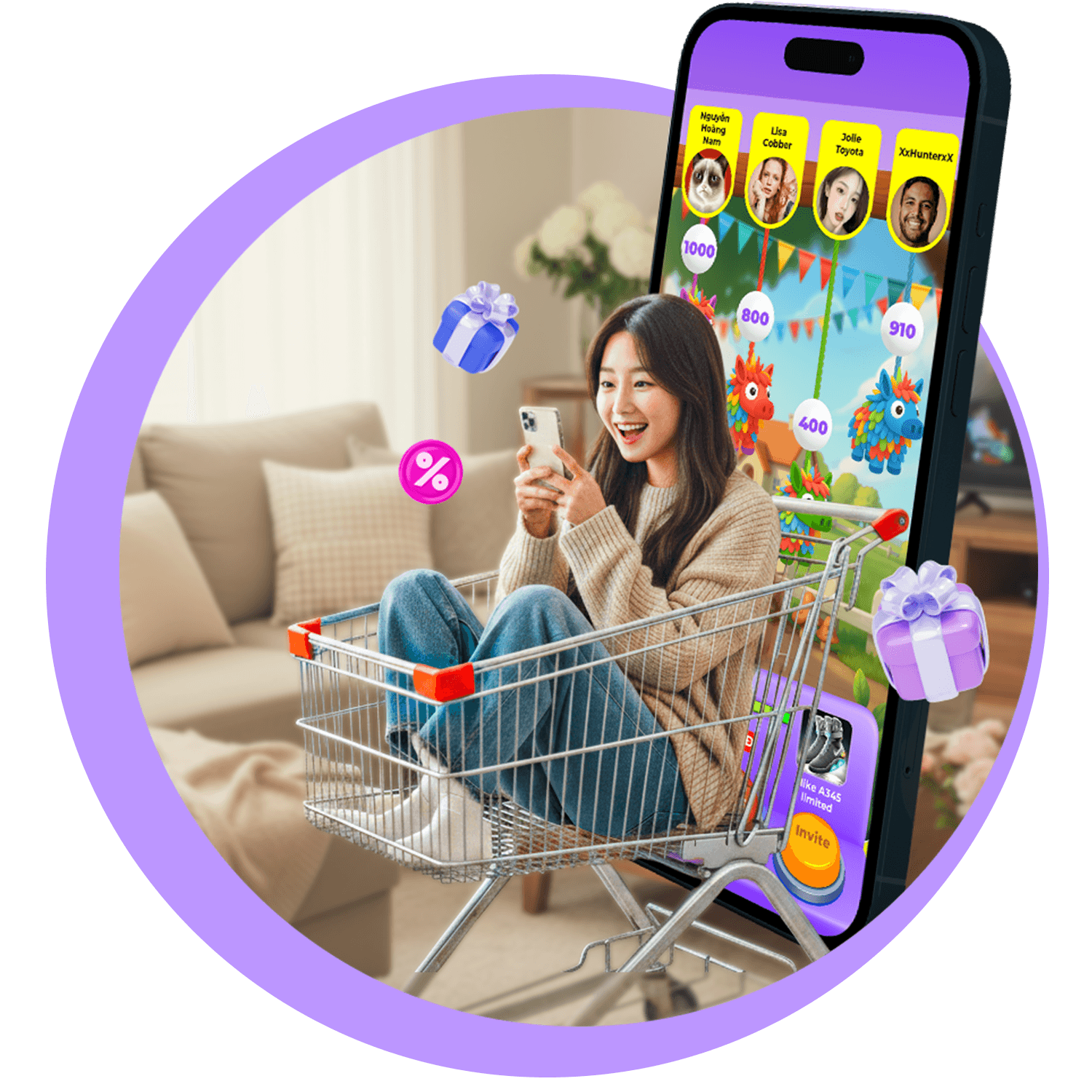
SOCIAL COMMERCE: WHEN SHOPPING BECOMES A SOCIAL BEHAVIOR
Over the past decade, Social Commerce has evolved far beyond being a passing trend. According to Accenture (2024), the market has reached a value of USD 1.2 trillion, growing at 26% annually, and is expected to account for 17% of total global e-commerce revenue by 2028.
China (home to pioneers like Pinduoduo and Douyin Shop) currently contributes more than 80% of global Social Commerce revenue.
What truly differentiates Social Commerce isn’t the discounts, it’s the sense of participation. Users don’t buy because they need something; they buy because it’s fun, because their friends are involved, and because a time-limited, FOMO-driven promotion feels like a game.

Pinduoduo exemplifies this perfectly. Its “砍价免费拿” (“bargain to win for free”) feature allows users to lower a product’s price by inviting friends to “cut” it down, turning every product into a mini community-driven game.
According to its 2023 financial report, over 65% of users participated in at least one group activity per month, and more than 70% of user acquisition came from peer-to-peer sharing. The result: Pinduoduo’s GMV reached USD 583 billion, surpassing JD.com - while its marketing spend was only one-third that of its rival.
But more importantly, Social Commerce is changing the nature of shopping itself: from an individual act to a social event, where emotional and relational value can outweigh even the appeal of low prices.
CASUAL GAMES: THE WORLD’S MOST EFFECTIVE USER RETENTION ENGINE

Meanwhile, the Casual Game industry has proven to be unmatched in retaining users and driving sustainable revenue.
According to Gamigion (2025), this genre accounts for 31% of global app downloads, engages 1.3 billion monthly active users, and generates USD 24.2 billion in revenue (11% increase from 2024). Intriguingly, 80% of that revenue comes from in-game ads, not item purchases.
Casual games like Candy Crush Saga or Coin Master boast 7-day retention rates above 40% and 30-day retention above 20%, while most e-commerce apps retain less than 10% of users after 30 days.
The secret lies in the “dopamine loop”: a cycle of small, rapid rewards that make players feel they’re “almost there,” compelling them to return daily to collect bonuses, complete missions, or reach the next milestone.
If this reward-driven emotional loop is applied to commerce, it could dramatically improve both user retention and lifetime value (LTV).

WHEN PLAY BECOMES THE MOTIVATION TO SHOP: THE INTERSECTION OF TWO WORLDS
Now, imagine these two forces combined:
▣ Social Commerce brings reasons to share and interact.
▣ Casual Games bring a sense of progress and reward.
Both rely on the same principle: engagement first, monetization later. That’s why so many commerce platforms are now gamifying the shopping experience.
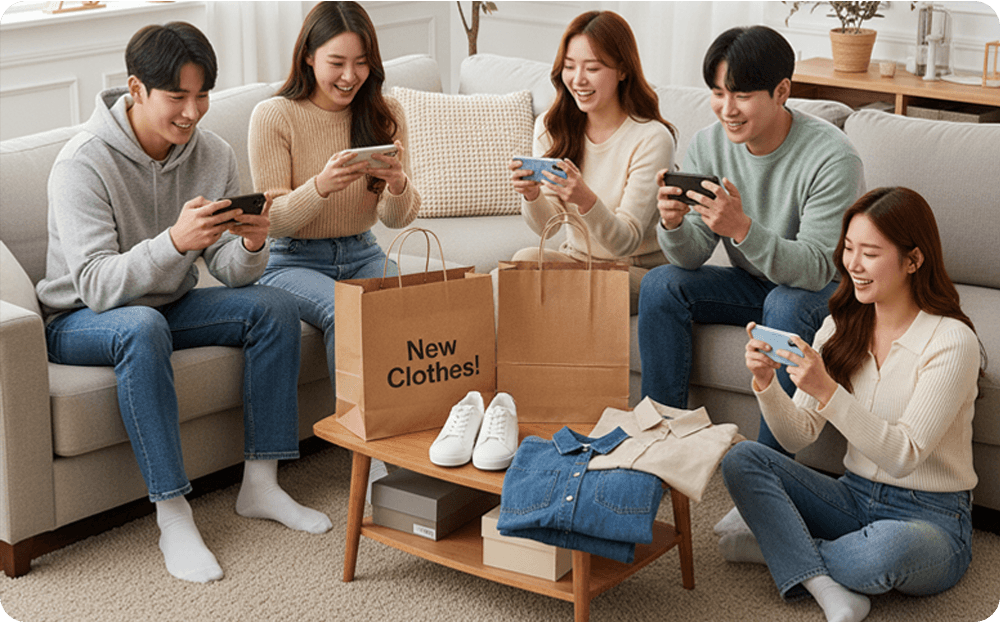
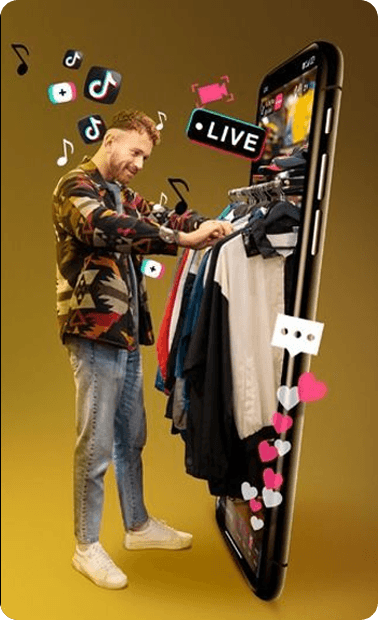
TikTok Shop, for instance, has launched multiple mini-game events (coin hunts, spin-to-win, etc.) during campaigns like 11.11 and 12.12, boosting 3-day retention by 47%.
In China, Meituan and Pinduoduo host over 50 seasonal interactive events (such as “Golden Egg Smash,” “Red Envelope Hunt,” or “Discount Races”) - all borrowing micro-reward mechanics from casual games.
From a behavioral standpoint, gaming and shopping are converging on the same goal: users no longer seek the best price, but the most memorable experience.
Campaigns like “bargain battles,” “gift box smashing,” or “check-in to win” mirror the game loop of a casual title: the player performs an action (input), sees progress (feedback), and earns a reward (output).
The only difference? The final reward isn’t virtual coins - it’s a real product.
THE FUTURE OF COMMERCE IS EMOTIONAL
As Gen Z and Millennials now make up over 60% of Southeast Asia’s digital consumers, they bring with them a new expectation: shopping must be entertaining, rewarding, and shareable.
That’s why models like Social Commerce and Game Commerce are emerging as the perfect answer: driving engagement, increasing sales, and reducing ad spend while fostering organic interaction.
According to Statista (2025), 74% of Gen Z consumers say they “like a brand more” if it offers an interactive experience, while only 34% react positively to plain discount-based promotions.
Thus, the future of commerce will no longer revolve around the question, “How much discount can we give?” but rather, “How can we make users want to come back?”


And sometimes, the answer is simple: turn every purchase into a mini-game.
SEENSIOGO — PIONEERING GAMIFIED SOCIAL COMMERCE IN VIETNAM
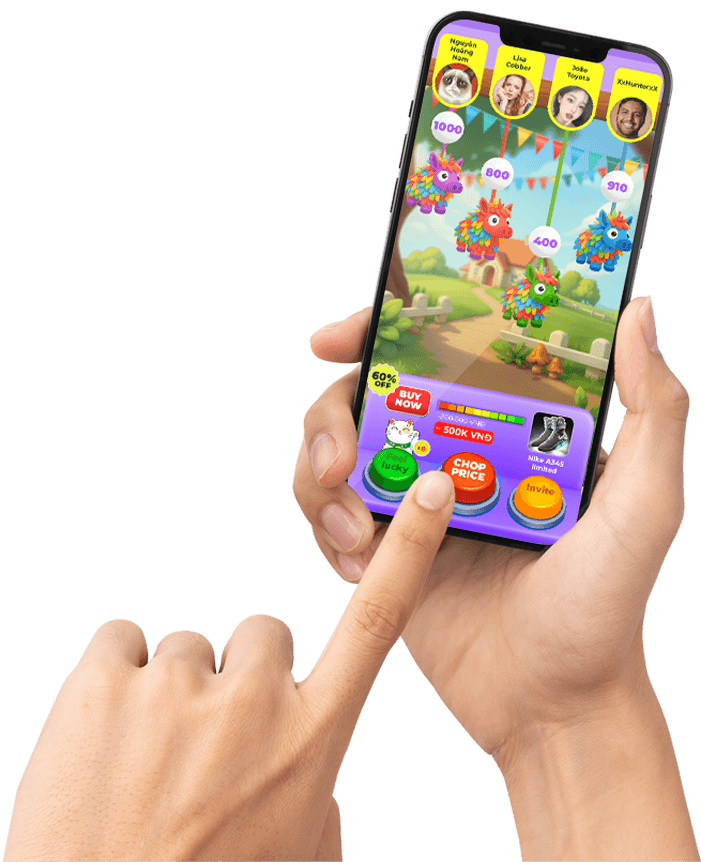
As a flagship product of JK Technologies, SeensioGO aims to become the leading Gamified Social Commerce platform in Vietnam - where brands connect with consumers through joy, not just discounts; and where users can “play to shop,” “slash to win deals,” and “share to triumph.”
In a market where users are increasingly disengaged by the “watch - click - buy” model, SeensioGO introduces a new approach: turning shopping into an interactive journey, users can slash prices, hunt rewards, and experience the thrill of victory.
Unlike typical shopping apps or standalone games, SeensioGO’s unique selling point lies in its fusion of social commerce and casual gaming. Every product isn’t just a listing, it’s a mini-event where users can compete, collaborate, and celebrate together.
Brands can design their own “Prize Hunt Campaigns”, while users engage in light mini-games, earn Sio points, cut prices, and redeem real-world rewards. This creates not only longer engagement and retention, but a self-sustaining ecosystem of entertainment and commerce - where emotion, reward, and community seamlessly intertwine.
REAL-WORLD VALIDATION: WHEN JOY BECOMES A GROWTH METRIC
Even during its alpha test phase (limited to one mall), SeensioGO demonstrated remarkable natural traction.
According to AppBrain, the app recorded over 3,100 downloads on its peak day, with users spending an average of 70 minutes per day, across five sessions daily - retention figures far exceeding typical e-commerce benchmarks.
The platform listed 300 products, each receiving 1,200+ average interactions, and hosted 15+ brand campaigns during the trial period.
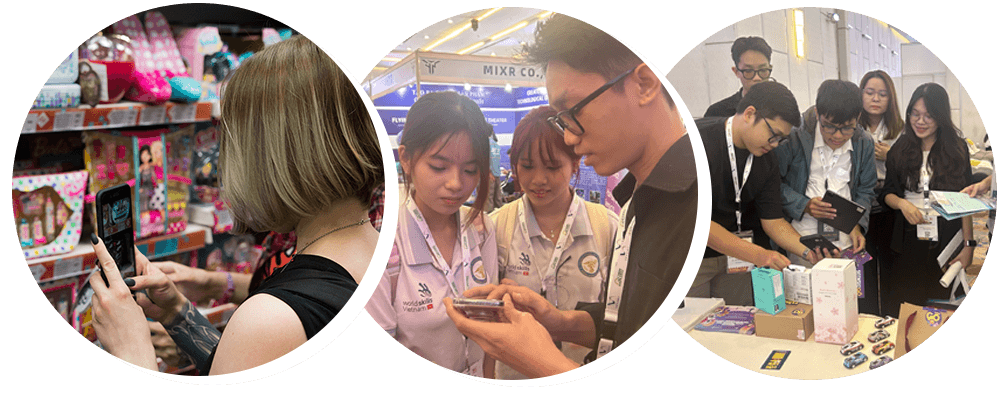
Most users discovered SeensioGO organically through word-of-mouth, proving that the elements of fun, sharing, and friendly competition drive natural virality, perfectly aligning with the DNA of Social Commerce.
These metrics not only highlight the appeal of the “shop like a game” model, but also affirm a larger truth: entertainment-driven experiences retain customers better than any discount ever could.
VISION: FROM INTERACTIVE EXPERIENCES TO A NEW CONSUMER BEHAVIOR
By merging the emotional pull of casual gaming with the social energy of online commerce, SeensioGO isn’t just following a trend—it’s redefining how Vietnamese consumers experience shopping: not as an act of spending, but as a shared journey of joy.
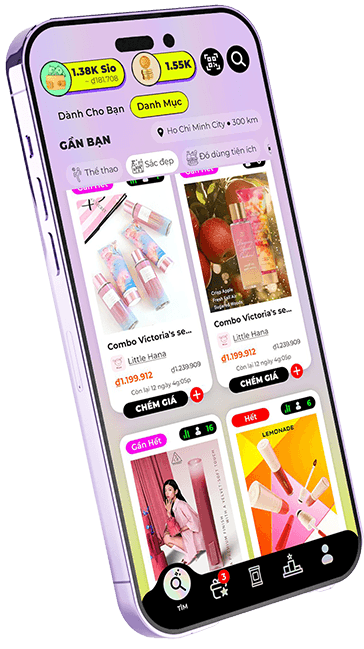
If traditional e-commerce is about “going to the market,” then Social Commerce is about “going to the market with friends,” and Casual Games are about “playing with friends to win together.”
At this intersection, commerce transforms from a transaction into an emotional social experience, where users find joy, connection, and reward - all in one loop.
When shopping becomes a game, and every brand becomes a curator of happiness, SeensioGO illustrates how emotion becomes the new currency - more valuable than discounts, vouchers, or ad budgets.
In this new era, the brands that make users smile before they spend will be the ones that win.
Let's create something amazing together
CONTACT US
Ready to turn your gamification vision into a reality? We're all ears! Drop us a line—we’d love to explore how SeensioGO can bring your next campaign to life.
Book a Meeting
Download SeensioGO and try it out!
See how other brands are using SeensioGO to promote their products


WHY SOCIAL COMMERCE AND CASUAL GAMES WILL SHAPE THE NEXT WAVE OF CONSUMER BEHAVIOR
In the digital world, users don’t just seek convenience—they seek emotion. And the two industries leading this emotional shift are Social Commerce and Casual Games. One makes shopping more social and shareable; the other makes entertainment more accessible, joyful, and irresistibly engaging.
When these two worlds intersect, they create a new consumer model—one where people can “play,” “shop,” and “share” all at once. And brands, in turn, sell not just through discounts but through delight.
This phenomenon, known as Gamified Social Commerce, is already on the rise across global markets - with the success of Pinduoduo in China often seen as the starting point.
SOCIAL COMMERCE: WHEN SHOPPING BECOMES A SOCIAL BEHAVIOR
Over the past decade, Social Commerce has evolved far beyond being a passing trend. According to Accenture (2024), the market has reached a value of USD 1.2 trillion, growing at 26% annually, and is expected to account for 17% of total global e-commerce revenue by 2028.
China (home to pioneers like Pinduoduo and Douyin Shop) currently contributes more than 80% of global Social Commerce revenue.
What truly differentiates Social Commerce isn’t the discounts, it’s the sense of participation. Users don’t buy because they need something; they buy because it’s fun, because their friends are involved, and because a time-limited, FOMO-driven promotion feels like a game.
Pinduoduo exemplifies this perfectly. Its “砍价免费拿” (“bargain to win for free”) feature allows users to lower a product’s price by inviting friends to “cut” it down, turning every product into a mini community-driven game.
According to its 2023 financial report, over 65% of users participated in at least one group activity per month, and more than 70% of user acquisition came from peer-to-peer sharing. The result: Pinduoduo’s GMV reached USD 583 billion, surpassing JD.com - while its marketing spend was only one-third that of its rival.
But more importantly, Social Commerce is changing the nature of shopping itself: from an individual act to a social event, where emotional and relational value can outweigh even the appeal of low prices.
CASUAL GAMES: THE WORLD’S MOST EFFECTIVE USER RETENTION ENGINE
Meanwhile, the Casual Game industry has proven to be unmatched in retaining users and driving sustainable revenue.
According to Gamigion (2025), this genre accounts for 31% of global app downloads, engages 1.3 billion monthly active users, and generates USD 24.2 billion in revenue (11% increase from 2024). Intriguingly, 80% of that revenue comes from in-game ads, not item purchases.
Casual games like Candy Crush Saga or Coin Master boast 7-day retention rates above 40% and 30-day retention above 20%, while most e-commerce apps retain less than 10% of users after 30 days.
The secret lies in the “dopamine loop”: a cycle of small, rapid rewards that make players feel they’re “almost there,” compelling them to return daily to collect bonuses, complete missions, or reach the next milestone.
If this reward-driven emotional loop is applied to commerce, it could dramatically improve both user retention and lifetime value (LTV).
WHEN PLAY BECOMES THE MOTIVATION TO SHOP: THE INTERSECTION OF TWO WORLDS
Now, imagine these two forces combined:
▣ Social Commerce brings reasons to share and interact.
▣ Casual Games bring a sense of progress and reward.
Both rely on the same principle: engagement first, monetization later. That’s why so many commerce platforms are now gamifying the shopping experience.
TikTok Shop, for instance, has launched multiple mini-game events (coin hunts, spin-to-win, etc.) during campaigns like 11.11 and 12.12, boosting 3-day retention by 47%.
In China, Meituan and Pinduoduo host over 50 seasonal interactive events (such as “Golden Egg Smash,” “Red Envelope Hunt,” or “Discount Races”) - all borrowing micro-reward mechanics from casual games.
From a behavioral standpoint, gaming and shopping are converging on the same goal: users no longer seek the best price, but the most memorable experience.
Campaigns like “bargain battles,” “gift box smashing,” or “check-in to win” mirror the game loop of a casual title: the player performs an action (input), sees progress (feedback), and earns a reward (output).
The only difference? The final reward isn’t virtual coins - it’s a real product.
THE FUTURE OF COMMERCE IS EMOTIONAL
As Gen Z and Millennials now make up over 60% of Southeast Asia’s digital consumers, they bring with them a new expectation: shopping must be entertaining, rewarding, and shareable.
That’s why models like Social Commerce and Game Commerce are emerging as the perfect answer: driving engagement, increasing sales, and reducing ad spend while fostering organic interaction.
According to Statista (2025), 74% of Gen Z consumers say they “like a brand more” if it offers an interactive experience, while only 34% react positively to plain discount-based promotions.
Thus, the future of commerce will no longer revolve around the question, “How much discount can we give?” but rather, “How can we make users want to come back?”
And sometimes, the answer is simple: turn every purchase into a mini-game.
SEENSIOGO — PIONEERING GAMIFIED SOCIAL COMMERCE IN VIETNAM
As a flagship product of JK Technologies, SeensioGO aims to become the leading Gamified Social Commerce platform in Vietnam - where brands connect with consumers through joy, not just discounts; and where users can “play to shop,” “slash to win deals,” and “share to triumph.”
In a market where users are increasingly disengaged by the “watch - click - buy” model, SeensioGO introduces a new approach: turning shopping into an interactive journey, users can slash prices, hunt rewards, and experience the thrill of victory.
Unlike typical shopping apps or standalone games, SeensioGO’s unique selling point lies in its fusion of social commerce and casual gaming. Every product isn’t just a listing, it’s a mini-event where users can compete, collaborate, and celebrate together.
Brands can design their own “Prize Hunt Campaigns”, while users engage in light mini-games, earn Sio points, cut prices, and redeem real-world rewards. This creates not only longer engagement and retention, but a self-sustaining ecosystem of entertainment and commerce - where emotion, reward, and community seamlessly intertwine.
REAL-WORLD VALIDATION: WHEN JOY BECOMES A GROWTH METRIC
Even during its alpha test phase (limited to one mall), SeensioGO demonstrated remarkable natural traction.
According to AppBrain, the app recorded over 3,100 downloads on its peak day, with users spending an average of 70 minutes per day, across five sessions daily - retention figures far exceeding typical e-commerce benchmarks.
The platform listed 300 products, each receiving 1,200+ average interactions, and hosted 15+ brand campaigns during the trial period.
Most users discovered SeensioGO organically through word-of-mouth, proving that the elements of fun, sharing, and friendly competition drive natural virality, perfectly aligning with the DNA of Social Commerce.
These metrics not only highlight the appeal of the “shop like a game” model, but also affirm a larger truth: entertainment-driven experiences retain customers better than any discount ever could.
VISION: FROM INTERACTIVE EXPERIENCES TO A NEW CONSUMER BEHAVIOR
By merging the emotional pull of casual gaming with the social energy of online commerce, SeensioGO isn’t just following a trend—it’s redefining how Vietnamese consumers experience shopping: not as an act of spending, but as a shared journey of joy.
If traditional e-commerce is about “going to the market,” then Social Commerce is about “going to the market with friends,” and Casual Games are about “playing with friends to win together.”
At this intersection, commerce transforms from a transaction into an emotional social experience, where users find joy, connection, and reward - all in one loop.
When shopping becomes a game, and every brand becomes a curator of happiness, SeensioGO illustrates how emotion becomes the new currency - more valuable than discounts, vouchers, or ad budgets.
In this new era, the brands that make users smile before they spend will be the ones that win.
Let's create something amazing together
CONTACT US
Ready to turn your gamification vision into a reality? We're all ears! Drop us a line—we’d love to explore how SeensioGO can bring your next campaign to life.
Book a Meeting
Download SeensioGO and try it out!
See how other brands are using SeensioGO to promote their products
WHY SOCIAL COMMERCE AND CASUAL GAMES WILL SHAPE THE NEXT WAVE OF CONSUMER BEHAVIOR
In the digital world, users don’t just seek convenience—they seek emotion. And the two industries leading this emotional shift are Social Commerce and Casual Games. One makes shopping more social and shareable; the other makes entertainment more accessible, joyful, and irresistibly engaging.
When these two worlds intersect, they create a new consumer model—one where people can “play,” “shop,” and “share” all at once. And brands, in turn, sell not just through discounts but through delight.
This phenomenon, known as Gamified Social Commerce, is already on the rise across global markets - with the success of Pinduoduo in China often seen as the starting point.
SOCIAL COMMERCE: WHEN SHOPPING BECOMES A SOCIAL BEHAVIOR
Over the past decade, Social Commerce has evolved far beyond being a passing trend. According to Accenture (2024), the market has reached a value of USD 1.2 trillion, growing at 26% annually, and is expected to account for 17% of total global e-commerce revenue by 2028.
China (home to pioneers like Pinduoduo and Douyin Shop) currently contributes more than 80% of global Social Commerce revenue.
What truly differentiates Social Commerce isn’t the discounts, it’s the sense of participation. Users don’t buy because they need something; they buy because it’s fun, because their friends are involved, and because a time-limited, FOMO-driven promotion feels like a game.
Pinduoduo exemplifies this perfectly. Its “砍价免费拿” (“bargain to win for free”) feature allows users to lower a product’s price by inviting friends to “cut” it down, turning every product into a mini community-driven game.
According to its 2023 financial report, over 65% of users participated in at least one group activity per month, and more than 70% of user acquisition came from peer-to-peer sharing. The result: Pinduoduo’s GMV reached USD 583 billion, surpassing JD.com - while its marketing spend was only one-third that of its rival.
But more importantly, Social Commerce is changing the nature of shopping itself: from an individual act to a social event, where emotional and relational value can outweigh even the appeal of low prices.
CASUAL GAMES: THE WORLD’S MOST EFFECTIVE USER RETENTION ENGINE
Meanwhile, the Casual Game industry has proven to be unmatched in retaining users and driving sustainable revenue.
According to Gamigion (2025), this genre accounts for 31% of global app downloads, engages 1.3 billion monthly active users, and generates USD 24.2 billion in revenue (11% increase from 2024). Intriguingly, 80% of that revenue comes from in-game ads, not item purchases.
Casual games like Candy Crush Saga or Coin Master boast 7-day retention rates above 40% and 30-day retention above 20%, while most e-commerce apps retain less than 10% of users after 30 days.
The secret lies in the “dopamine loop”: a cycle of small, rapid rewards that make players feel they’re “almost there,” compelling them to return daily to collect bonuses, complete missions, or reach the next milestone.
If this reward-driven emotional loop is applied to commerce, it could dramatically improve both user retention and lifetime value (LTV).
WHEN PLAY BECOMES THE MOTIVATION TO SHOP: THE INTERSECTION OF TWO WORLDS
Now, imagine these two forces combined:
▣ Social Commerce brings reasons to share and interact.
▣ Casual Games bring a sense of progress and reward.
Both rely on the same principle: engagement first, monetization later. That’s why so many commerce platforms are now gamifying the shopping experience.
TikTok Shop, for instance, has launched multiple mini-game events (coin hunts, spin-to-win, etc.) during campaigns like 11.11 and 12.12, boosting 3-day retention by 47%.
In China, Meituan and Pinduoduo host over 50 seasonal interactive events (such as “Golden Egg Smash,” “Red Envelope Hunt,” or “Discount Races”) - all borrowing micro-reward mechanics from casual games.
From a behavioral standpoint, gaming and shopping are converging on the same goal: users no longer seek the best price, but the most memorable experience.
Campaigns like “bargain battles,” “gift box smashing,” or “check-in to win” mirror the game loop of a casual title: the player performs an action (input), sees progress (feedback), and earns a reward (output).
The only difference? The final reward isn’t virtual coins - it’s a real product.
THE FUTURE OF COMMERCE IS EMOTIONAL
As Gen Z and Millennials now make up over 60% of Southeast Asia’s digital consumers, they bring with them a new expectation: shopping must be entertaining, rewarding, and shareable.
That’s why models like Social Commerce and Game Commerce are emerging as the perfect answer: driving engagement, increasing sales, and reducing ad spend while fostering organic interaction.
According to Statista (2025), 74% of Gen Z consumers say they “like a brand more” if it offers an interactive experience, while only 34% react positively to plain discount-based promotions.
Thus, the future of commerce will no longer revolve around the question, “How much discount can we give?” but rather, “How can we make users want to come back?”
And sometimes, the answer is simple: turn every purchase into a mini-game.
SEENSIOGO — PIONEERING GAMIFIED SOCIAL COMMERCE IN VIETNAM
As a flagship product of JK Technologies, SeensioGO aims to become the leading Gamified Social Commerce platform in Vietnam - where brands connect with consumers through joy, not just discounts; and where users can “play to shop,” “slash to win deals,” and “share to triumph.”
In a market where users are increasingly disengaged by the “watch - click - buy” model, SeensioGO introduces a new approach: turning shopping into an interactive journey, users can slash prices, hunt rewards, and experience the thrill of victory.
Unlike typical shopping apps or standalone games, SeensioGO’s unique selling point lies in its fusion of social commerce and casual gaming. Every product isn’t just a listing, it’s a mini-event where users can compete, collaborate, and celebrate together.
Brands can design their own “Prize Hunt Campaigns”, while users engage in light mini-games, earn Sio points, cut prices, and redeem real-world rewards. This creates not only longer engagement and retention, but a self-sustaining ecosystem of entertainment and commerce - where emotion, reward, and community seamlessly intertwine.
REAL-WORLD VALIDATION: WHEN JOY BECOMES A GROWTH METRIC
Even during its alpha test phase (limited to one mall), SeensioGO demonstrated remarkable natural traction.
According to AppBrain, the app recorded over 3,100 downloads on its peak day, with users spending an average of 70 minutes per day, across five sessions daily - retention figures far exceeding typical e-commerce benchmarks.
The platform listed 300 products, each receiving 1,200+ average interactions, and hosted 15+ brand campaigns during the trial period.
Most users discovered SeensioGO organically through word-of-mouth, proving that the elements of fun, sharing, and friendly competition drive natural virality, perfectly aligning with the DNA of Social Commerce.
These metrics not only highlight the appeal of the “shop like a game” model, but also affirm a larger truth: entertainment-driven experiences retain customers better than any discount ever could.
VISION: FROM INTERACTIVE EXPERIENCES TO A NEW CONSUMER BEHAVIOR
By merging the emotional pull of casual gaming with the social energy of online commerce, SeensioGO isn’t just following a trend—it’s redefining how Vietnamese consumers experience shopping: not as an act of spending, but as a shared journey of joy.
If traditional e-commerce is about “going to the market,” then Social Commerce is about “going to the market with friends,” and Casual Games are about “playing with friends to win together.”
At this intersection, commerce transforms from a transaction into an emotional social experience, where users find joy, connection, and reward - all in one loop.
When shopping becomes a game, and every brand becomes a curator of happiness, SeensioGO illustrates how emotion becomes the new currency - more valuable than discounts, vouchers, or ad budgets.
In this new era, the brands that make users smile before they spend will be the ones that win.
Let's create something amazing together
CONTACT US
Ready to turn your gamification vision into a reality? We're all ears! Drop us a line—we’d love to explore how SeensioGO can bring your next campaign to life.
Book a Meeting
Download SeensioGO and try it out!
See how other brands are using SeensioGO to promote their products